Why Has LiFePO₄ Battery Technology Become So Popular?
As energy storage technologies continue to evolve, long-lasting, safe, and high-performance solutions have become a priority for both individual users and industrial sectors. Batteries used in solar energy systems, caravan power systems, marine applications, telecommunications infrastructure, and industrial energy storage are no longer expected to simply supply energy. They must also provide safety, durability, and cost efficiency. One of the technologies that stands out in this regard is LiFePO₄ battery technology.
LiFePO₄, or Lithium Iron Phosphate battery technology, has become increasingly popular in recent years due to its enhanced safety characteristics, long cycle life, and stable performance compared to many other lithium-ion battery chemistries. As the demand for energy storage continues to grow, users are increasingly turning to longer-lasting, low-maintenance solutions. As a result, LiFePO₄ battery technology is becoming widespread not only in professional projects but also in many everyday applications.
What Is a LiFePO₄ Battery?
A LiFePO₄ battery is a type of lithium-ion battery that uses lithium iron phosphate as its cathode material. This technology has a more chemically stable structure compared to many conventional lithium-ion battery chemistries. Its strong thermal stability is one of the main reasons why these batteries are preferred across various industries.
Compared to traditional lead-acid batteries, LiFePO₄ battery models are significantly lighter and offer higher energy efficiency. Their ability to store and deliver energy with a relatively stable voltage profile helps reduce voltage fluctuations and maintain consistent device performance. This provides a significant advantage, particularly in sensitive electronic systems.
Another important feature of LiFePO₄ technology is its deep discharge capability. While discharging conventional batteries below certain levels can cause damage, LiFePO₄ battery systems can operate at greater depths of discharge with less degradation when used within their specified operating limits. This allows users to utilize stored energy more efficiently.
What Are the Advantages of LiFePO₄ Batteries?
Long Service Life
A battery’s service life is generally measured by the number of charge-discharge cycles it can complete. While conventional lead-acid batteries typically provide approximately 300 to 500 cycles, a high-quality LiFePO₄ battery system can achieve 3,000 to 6,000 cycles, depending on operating conditions and battery specifications. This translates into years of reliable performance.
Their long service life reduces the need for frequent battery replacements. This provides significant cost advantages, especially in commercial applications. It is also one of the primary reasons why LiFePO₄ batteries are preferred in continuously operating systems such as solar energy installations.
Enhanced Safety
Safety is one of the most critical considerations in battery systems. Overheating, fire hazards, and potential explosions can create serious risks, particularly in poorly designed or low-quality battery systems. Thanks to its chemical structure, LiFePO₄ technology offers greater thermal stability and a lower risk of thermal runaway compared to many other lithium-ion chemistries.
For this reason, properly designed LiFePO₄ battery systems are suitable for caravans, boats, solar energy installations, and indoor applications. Their thermal stability makes this technology an attractive option for various operating environments, provided that the manufacturer’s temperature limits and safety requirements are followed.
Lightweight and Compact Design
Lead-acid batteries are relatively heavy. A LiFePO₄ battery with comparable usable energy capacity can be significantly lighter, providing a major advantage in portable applications.
Weight is an important consideration for caravan owners, businesses using mobile power systems, and users in the marine industry. A lighter design improves portability and can contribute to greater overall energy efficiency in mobile applications.
Faster Charging Capability
LiFePO₄ batteries can support relatively high charging currents, allowing them to reach full capacity in less time than many conventional lead-acid batteries, provided that the charging equipment and battery specifications are compatible. This is particularly advantageous in applications where charging time is critical.
From electric vehicle systems to solar energy storage solutions, faster charging capabilities can significantly improve the user experience. In addition, lower energy losses during charging contribute to improved overall system efficiency.
Minimal Maintenance Requirements
Certain types of lead-acid batteries require regular maintenance. Tasks such as checking electrolyte levels, cleaning terminals, and monitoring battery performance can create additional work for users. In contrast, LiFePO₄ battery technology requires minimal routine maintenance.
This provides greater convenience, especially in continuously operating energy systems. Users can benefit from reliable, long-term energy storage without the frequent maintenance requirements associated with some traditional battery technologies.
Where Are LiFePO₄ Batteries Used?
LiFePO₄ battery technology is widely used across various industries today. It is particularly preferred in systems where reliable energy storage is essential.
The main application areas include:
- Solar energy systems
- Caravan power systems
- Marine and boating applications
- Telecommunications infrastructure
- Uninterruptible Power Supply (UPS) systems
- Electric vehicle systems
- Industrial energy storage solutions
- Portable power stations
- Robotics and automation systems
The use of LiFePO₄ batteries continues to expand in applications where uninterrupted energy availability is essential.
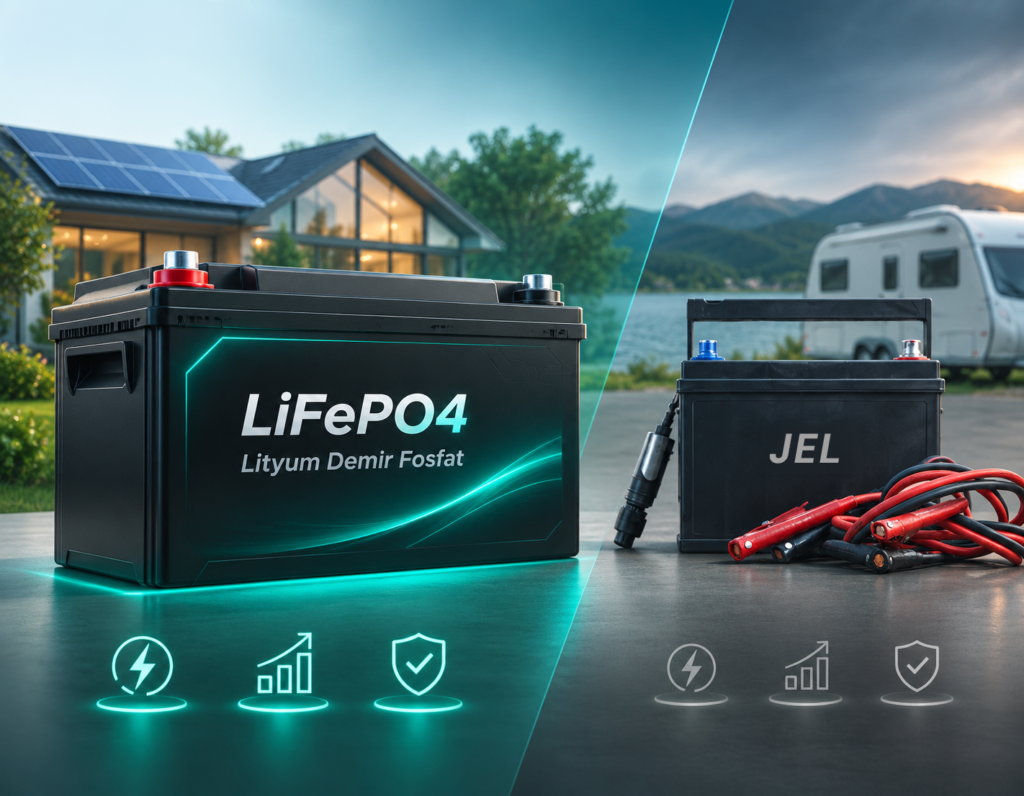
LiFePO₄ Batteries vs. Lead-Acid Batteries: Which Is Better?
Many users face a decision between these two technologies when upgrading to modern energy storage systems. In terms of initial investment, lead-acid batteries may appear more affordable. However, when long-term operating costs are considered, LiFePO₄ battery systems can offer significant advantages.
With their longer service life, lower maintenance requirements, higher efficiency, and enhanced safety characteristics, LiFePO₄ batteries can provide substantial benefits in terms of total cost of ownership. Furthermore, lower energy losses contribute to more consistent system performance.
Since uninterrupted energy availability is essential in professional applications, many businesses are increasingly transitioning from traditional lead-acid battery systems to LiFePO₄ battery solutions.