Why Is Battery Manufacturing a Strategic Technology Sector?
Today, energy storage technologies have evolved beyond being mere components of electronic devices and have become the backbone of numerous industries, ranging from automotive and renewable energy systems to industrial infrastructure and mobile power solutions. The widespread adoption of electric vehicles, the expansion of renewable energy sources such as solar and wind power, and the increasing diversity of portable devices have made battery manufacturing a strategically important sector on a global scale.
With the advancement of lithium-based technologies in particular, battery manufacturing is no longer simply a mechanical assembly process. It has become an integration of chemical, electronic, and automated processes requiring exceptional precision. Battery performance depends on multiple factors, including cell quality, cell balancing during production, Battery Management System (BMS) software, and quality control testing. Therefore, modern battery manufacturing requires advanced engineering capabilities and high-tech production processes.
In Türkiye, growing demand for energy storage has also increased interest in battery technologies. Reliable and long-lasting battery manufacturing processes are becoming increasingly important, particularly for batteries used in solar energy systems, caravan applications, and industrial solutions.
What Is Battery Manufacturing?
Battery manufacturing is the process of producing, assembling, and integrating electrochemical cells into safe and functional energy storage systems. This process is not limited to cell production; it also includes protection circuits, software-based management systems, and safety testing.
A battery cell primarily consists of an anode, cathode, electrolyte, and separator. Combining these components under precisely controlled conditions directly affects battery performance. This level of precision is particularly critical in lithium-based technologies such as LiFePO₄ and NMC.
The objective of battery manufacturing is not merely to store energy but to develop a safe, durable, and consistently performing system. For this reason, the manufacturing process consists of multiple interconnected stages.
Key Stages of the Battery Manufacturing Process
A. Cell Manufacturing
1. Cell Assembly and Electrolyte Filling
At this stage, prepared anode and cathode sheets are either wound into rolls or stacked in layers, depending on the cell format, with thin ion-permeable separator layers placed between them.
Following mechanical assembly and terminal welding, liquid electrolyte is injected into the cells under vacuum conditions to enable ion transport. The cells are then hermetically sealed.
To prevent microscopic dust particles or moisture from causing internal short circuits, these processes are carried out in highly controlled cleanroom and dry-room environments using advanced automated machinery.
2. Cell Formation and Aging
After electrolyte filling, the cells undergo a controlled resting period known as wetting, allowing the electrolyte to fully penetrate the electrode structure.
The cells then enter a critical activation stage known as formation.
During this process, the cells undergo their initial charging and discharging cycles using precisely controlled current and voltage profiles. This process promotes the formation of a protective chemical layer on the electrode surfaces, known as the Solid Electrolyte Interphase (SEI).
The characteristics and stability of this layer play an important role in determining battery service life, performance, and safety.
3. Quality Control, Grading, and Sorting
Following activation, the cells undergo aging under controlled temperature conditions, including room-temperature and elevated-temperature environments. Voltage changes are monitored over time to identify cells with excessive self-discharge or potential internal defects.
At the end of these tests, each cell’s actual capacity and internal resistance (IR) are measured.
Cells are then classified and grouped according to closely matched electrical characteristics, including capacity, voltage, and internal resistance. This grading and sorting process helps ensure consistent performance when cells are assembled into battery modules and packs.
High-quality cells that meet strict manufacturing specifications are commonly classified as Grade A cells.
B. Battery Pack Assembly
1. Battery Pack and Module Assembly
Once cell manufacturing and testing have been completed, individual cells are assembled into battery modules or packs according to the specific system architecture.
At this stage, cells are connected in series (S) and parallel (P) configurations to achieve the voltage, capacity, and current requirements of the intended application.
Examples include 12V, 48V, and 51.2V Energy Storage System (ESS) configurations.
During assembly, specialized cell holders are used to maintain mechanical stability and protect cells against vibration. Electrical connections are established using high-current busbars.
One of the most critical parameters in this stage is cell compatibility.
If cells with closely matched capacity, voltage, and internal resistance values are not used, performance imbalances, undesirable circulating currents in parallel-connected cells, and premature aging may occur.
Therefore, cell matching is a fundamental requirement for reliable battery pack manufacturing.
2. Battery Management System (BMS) Integration
In modern battery engineering, the Battery Management System (BMS) serves as the electronic control center and a critical protection mechanism of the battery pack.
Integrated during the assembly process, the BMS continuously monitors the voltage of individual cell groups, instantaneous current, and temperature measurements at different points within the battery pack.
Advanced BMS hardware and software enable the following functions:
- Overcharge and Overdischarge Protection: Prevents cells from exceeding their specified over-voltage and under-voltage limits.
- Thermal Management: Monitors battery temperature and supports temperature-related protection functions to maintain safe operating conditions.
- Short-Circuit and Overcurrent Protection: Detects abnormal current conditions and initiates protective disconnection within the system’s specified response time.
- Cell Balancing: Uses balancing algorithms to reduce voltage and state-of-charge differences between cells, supporting consistent battery pack performance.
In LiFePO₄ (Lithium Iron Phosphate) battery technologies, which have a relatively flat voltage curve, advanced BMS integration is particularly important for accurate State of Charge (SOC) estimation and overall system safety.
3. Quality Control and End-of-Line (EOL) Testing
After assembly and wiring are completed, battery packs undergo final quality control procedures known as End-of-Line (EOL) tests before shipment to customers.
These tests evaluate battery performance and protective functions under controlled conditions designed to represent real-world operating requirements.
The main testing procedures include:
- Capacity and Load Testing: Verifies whether the battery delivers its specified ampere-hour (Ah) capacity and measures voltage drops and DC internal resistance (DCIR) under nominal and maximum load conditions.
- BMS Functional Verification: Tests the correct operation of BMS protection thresholds, including overcurrent, short-circuit, and temperature protection, using controlled test procedures or simulated fault conditions.
- Insulation and Ingress Protection (Hipot/IP) Testing: Evaluates electrical insulation integrity and verifies enclosure protection against dust and water ingress according to the applicable IP rating and test requirements.
- Communication Testing: Verifies communication protocols, such as CAN bus and RS485, which enable the battery to communicate with inverters, caravan electrical systems, or vehicle control units.
Battery packs that successfully complete the required End-of-Line tests are approved for use in accordance with the manufacturer’s quality standards and applicable safety requirements.
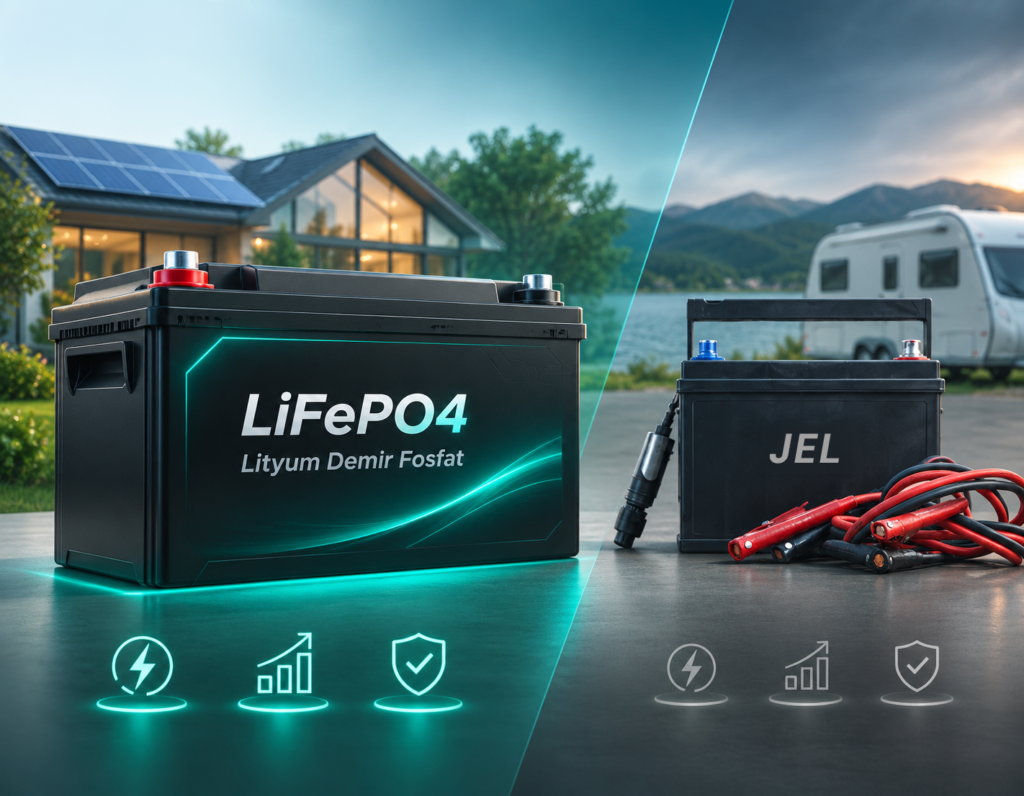
The Rise of LiFePO₄ (Lithium Iron Phosphate) Battery Technology
In recent years, LiFePO₄ (Lithium Iron Phosphate) technology has emerged as one of the leading battery chemistries in the global battery industry and the transition toward clean energy.
Compared to conventional lithium-ion chemistries such as NMC and LCO, LiFePO₄ offers significant advantages in structural stability, cycle life, and thermal safety.
The strong chemical bonds within the lithium iron phosphate cathode structure provide excellent thermal stability and reduce oxygen release under elevated-temperature conditions. This contributes to a lower risk of thermal runaway and fire compared to many other lithium-ion chemistries, although these risks cannot be eliminated entirely.
Depending on cell quality, depth of discharge, temperature, and operating conditions, LiFePO₄ batteries can achieve approximately 3,000 to 6,000 charge-discharge cycles. Actual cycle life at 100% Depth of Discharge (DoD) varies according to the manufacturer’s specifications and test conditions.
This technology has become increasingly common in solar Energy Storage Systems (ESS), caravan leisure batteries, Electric Vehicles (EVs), and military and industrial power applications.
Furthermore, LiFePO₄ cathode chemistry does not require cobalt or nickel, two materials associated with high costs and supply-chain challenges. This offers potential advantages in raw material costs, supply-chain stability, and sustainable large-scale manufacturing.
The Impact of Automation and Industry 4.0 on Battery Manufacturing
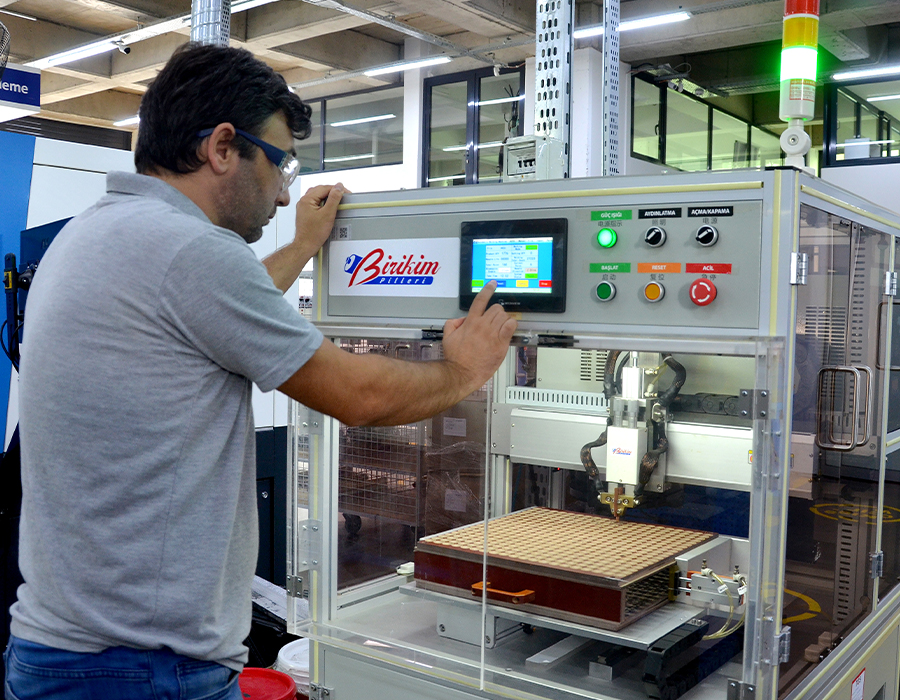
Modern battery manufacturing increasingly relies on advanced automation systems due to the extremely high precision required throughout production.
Automated Guided Vehicles (AGVs), robotic cell assembly lines, and Artificial Intelligence (AI)-assisted Automated Optical Inspection (AOI) systems are among the key technologies used in modern smart factories.
These technologies enable manufacturers to maintain tight production tolerances, improve process consistency, reduce defect rates, and optimize production speed and energy efficiency.
Through Industry 4.0 technologies, battery manufacturers can implement comprehensive digital traceability systems, ranging from raw material processing to finished battery pack assembly.
Individual cells and battery components can be assigned unique QR codes or serial numbers, while digital twin technologies can provide virtual representations of physical products and manufacturing processes.
These systems enable manufacturers to track production history, monitor quality parameters, and identify the manufacturing batches associated with potential field failures or performance anomalies.
As a result, digitalization and automation play an increasingly important role in improving product reliability, manufacturing efficiency, and quality assurance throughout the battery industry.