What Is a LiFePO₄ Battery?
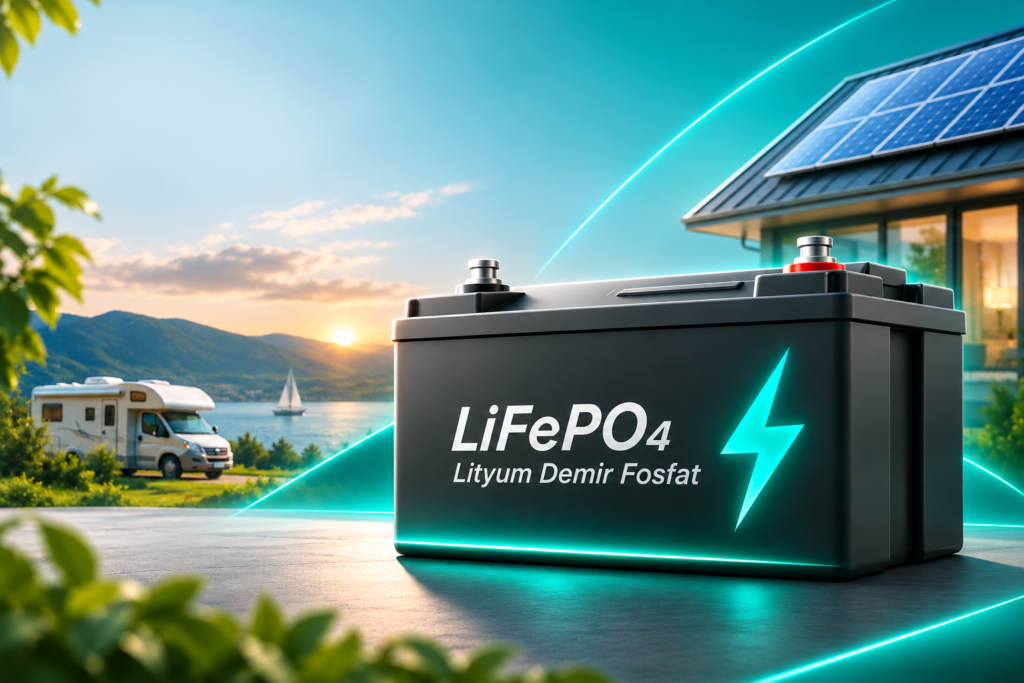
A LiFePO₄ battery is a next-generation lithium battery system based on Lithium Iron Phosphate technology. Due to its more stable and safer chemical structure compared to many conventional lithium-ion battery chemistries, it is widely preferred in energy storage applications.
These systems stand out for their long cycle life, fast charging capabilities, and stable power output. LiFePO₄ batteries are becoming increasingly common in solar energy systems, caravan electrical systems, marine applications, and mobile power solutions.
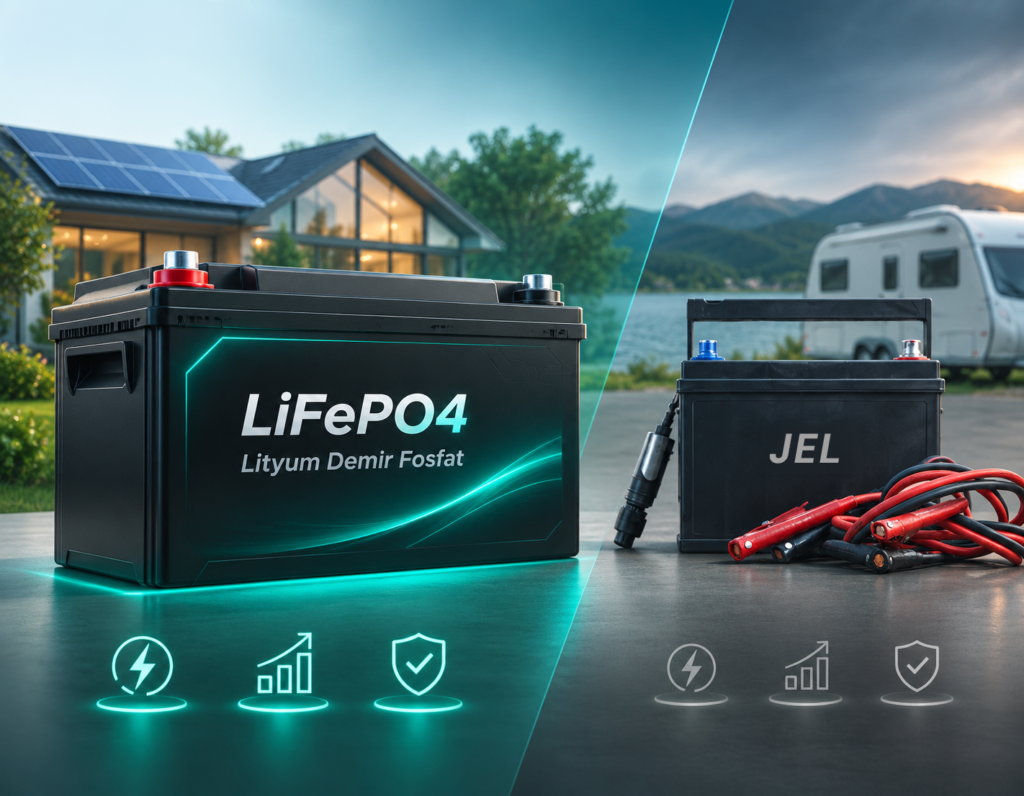
One of the most important features of LiFePO₄ batteries is their deep discharge capability. These systems enable more efficient energy utilization and provide reliable performance over an extended service life. Therefore, in LiFePO₄ vs. gel battery comparisons, lithium batteries are generally considered a more technologically advanced solution.
What Is a Gel Battery?
Gel batteries are an advanced type of lead-acid battery technology. These systems contain a gel-like electrolyte and are classified as maintenance-free battery solutions. Gel batteries have been used for many years, particularly in UPS systems, small-scale solar energy applications, and certain mobile power solutions.
One of the main advantages of gel batteries is their relatively low initial cost. They can provide an economical option for users with limited investment budgets. However, when considering long-term operation, they have certain disadvantages in terms of cycle life, weight, energy efficiency, and overall performance.
For this reason, many users investing in energy storage systems are comparing LiFePO₄ and gel batteries to identify more efficient solutions.
LiFePO₄ vs. Gel Battery: What Are the Main Differences?
Service Life Comparison
One of the greatest advantages of lithium batteries is their long cycle life. A typical gel battery generally provides approximately 500 to 1,000 charge-discharge cycles, depending on operating conditions. In comparison, a high-quality LiFePO₄ battery system can achieve approximately 3,000 to 6,000 cycles.
This difference provides a significant advantage in systems that require continuous energy storage. Frequent battery replacements in solar energy installations or caravan applications can result in considerable costs. LiFePO₄ batteries, on the other hand, offer reliable performance over many years, helping reduce the total cost of ownership.
When evaluated from a long-term perspective, LiFePO₄ batteries offer a clear advantage over gel batteries in terms of service life.
Weight and Portability
Gel batteries are relatively heavy. Particularly in applications requiring high energy storage capacity, their weight can become a significant limitation. LiFePO₄ batteries, in contrast, are considerably lighter for comparable energy storage capacities.
Weight is an important consideration for caravan owners, boat operators, and users of mobile energy systems. Lighter battery systems improve portability and can contribute to greater overall efficiency in mobile applications.
Therefore, LiFePO₄ technology offers a significant advantage over gel batteries in applications where weight and mobility are critical.
Charging Time and Efficiency
LiFePO₄ batteries can support higher charging currents, allowing them to recharge significantly faster than many gel batteries. Gel batteries generally require longer charging times and experience greater energy losses.
This difference is particularly important in solar energy systems. The ability to store energy efficiently during available sunlight hours improves overall system performance. Since LiFePO₄ batteries operate with lower energy losses, a greater proportion of the stored energy can be utilized.
Additionally, gel batteries are more sensitive to deep discharge. Repeated deep discharge cycles can accelerate capacity degradation. LiFePO₄ battery systems, on the other hand, provide more stable performance across a wider usable state-of-charge range.
In summary, to maintain a long service life, it is generally not recommended to use the entire capacity of a gel battery. Depending on the manufacturer’s specifications and operating conditions, approximately 60% of its nominal capacity may be utilized, leaving around 40% remaining before recharging.
In contrast, LiFePO₄ batteries can typically utilize a much greater proportion of their nominal capacity within the manufacturer’s recommended discharge limits. As a result, a LiFePO₄ battery with the same nominal capacity can deliver more usable energy than a gel battery, providing longer operating times on a single charge.
Which Is Better in Terms of Safety?
Safety is a critical consideration in energy storage systems. LiFePO₄ batteries offer excellent thermal stability. Their chemical structure reduces the risk of overheating and thermal runaway compared to many other lithium-ion battery chemistries.
Although gel batteries are also considered a reliable energy storage solution, they may experience performance degradation under high-temperature conditions. In addition, capacity loss can become more pronounced over extended periods of use.
For indoor applications, both technologies require appropriate installation, ventilation where necessary, and suitable protection systems. LiFePO₄ batteries offer significant thermal stability advantages, particularly when equipped with a properly designed Battery Management System (BMS).
Maintenance and Ease of Use
Gel batteries are generally classified as maintenance-free systems. However, regular performance monitoring remains important during operation. Batteries that remain discharged for extended periods may experience capacity loss.
LiFePO₄ batteries also have minimal maintenance requirements. Their relatively stable voltage characteristics help maintain consistent device performance throughout much of the discharge cycle. This allows users to benefit from reliable operation over extended periods.
These characteristics are particularly advantageous for commercial businesses and continuously operating energy storage systems.
Which Battery System Is More Economical?
In terms of initial purchase cost, gel batteries may offer a more affordable option. However, when the total cost of ownership is considered, LiFePO₄ batteries can become significantly more economical over the long term.
Their longer service life, lower energy losses, faster charging capabilities, and minimal maintenance requirements can help offset the higher initial investment over time. This difference can become particularly significant in energy storage systems that are used frequently or continuously.
Therefore, when comparing LiFePO₄ and gel batteries, it is essential to consider not only the initial purchase price but also long-term performance, energy efficiency, replacement frequency, and overall operating costs.