The Role of Testing and Quality Control in Energy Safety
As energy storage technologies become more widespread, battery safety and reliability are becoming just as important as performance. Batteries used in electric vehicles, solar energy systems, uninterruptible power supplies (UPS) and industrial storage infrastructure directly affect user safety and operational continuity. Testing and quality control are therefore integral to manufacturing.
Battery performance in real-world applications is determined by more than cell quality alone. Design, manufacturing, system integration and validation also play important roles in system reliability. As LiFePO₄ (lithium iron phosphate) technology becomes more widely adopted, verifying performance and safety characteristics is increasingly important.
The growth of energy storage applications in Türkiye and worldwide underscores the importance of battery testing. Storing energy safely, efficiently and reliably is as essential as generating it.
What Are Battery Testing and Quality Control?
Battery testing and quality control verify product specifications, measure performance and assess compliance with defined quality, safety and conformity criteria. Capacity, voltage behaviour, internal resistance, performance at different temperatures, cycle life and operating characteristics under load form the basis of these assessments.
Quality control goes beyond identifying manufacturing defects. It also assesses performance and reliability during use and aims to ensure a consistent level of quality across finished batteries.
Why Are Battery Tests Important?
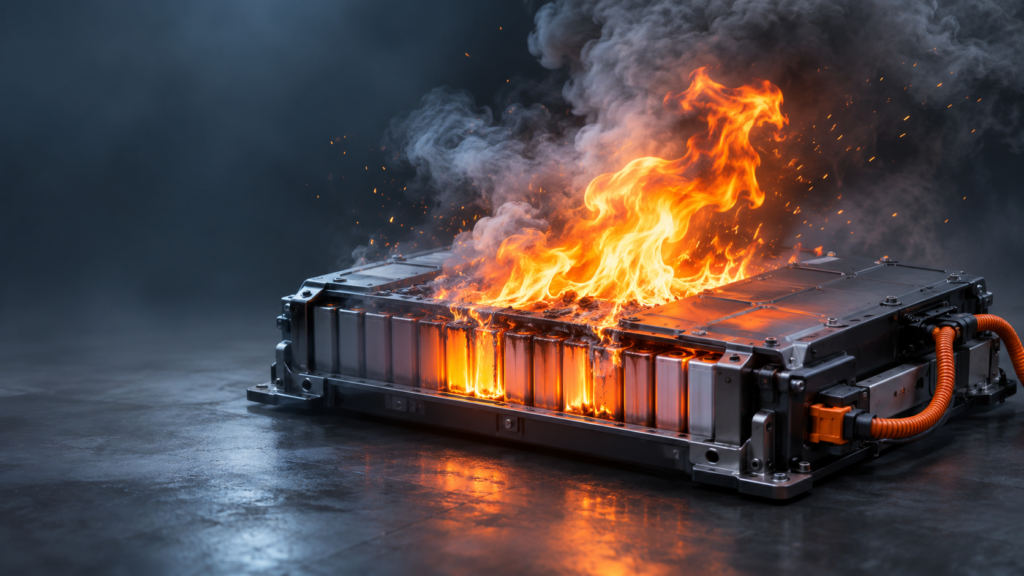
Design, manufacturing or integration defects in batteries that store substantial amounts of energy can lead to significant performance and safety issues. Testing plays a key role in assessing these risks.
Batteries that have not undergone adequate testing and quality control may exhibit the following issues:
- Failure to deliver the expected capacity,
- Overheating,
- Cell imbalance,
- Safety risks,
- A shorter-than-expected service life.
Comprehensive testing supports the assessment of product quality, user safety, operational continuity and long-term performance.
Key Stages of Battery Testing
Capacity Test
In capacity testing, the battery is charged under defined conditions and then discharged in a controlled manner. The resulting measurements establish its storage capacity.
Comparing measured capacity with the nominal rating indicates whether the product delivers the expected performance. This verification is particularly important for LiFePO₄ battery systems.
Performance Testing Under Load
Load testing examines battery behaviour at different current and power levels. Voltage variations, current-carrying capability and performance stability are assessed during this process.
Voltage remaining within defined limits is an important indicator of power delivery capability. Unexpected or sudden voltage drops may warrant examination of cell characteristics, internal resistance, connections and system design.
Internal Resistance Measurement
Internal resistance is a key parameter influencing power delivery, energy efficiency and heat generation during operation. Lower internal resistance generally helps reduce energy losses and heat generation.
During quality control, cell internal resistance is measured and cells are matched according to defined tolerances. This practice helps reduce performance differences within the pack and supports balanced cell operation.
Temperature Resistance Test
Batteries may experience temperature variations during charging and discharging. Testing under different temperature conditions is important for assessing system performance and operating behaviour.
Capacity, voltage, operational stability and safety behaviour are examined under temperature conditions defined by the intended application and test criteria. Although LiFePO₄ chemistry offers thermal stability advantages, safe operation must also be assessed in relation to temperature, charging and discharging conditions, and system design.
Cycle Life Test
Cycle life testing aims to establish how many charge-discharge cycles a battery can sustain at an acceptable performance level under specified conditions. Long-term measurements track capacity loss and performance changes.
Temperature, charge and discharge rates, operating conditions and capacity loss criteria affect cycle life. Data obtained from these tests inform product selection for solar energy systems, electric vehicles and industrial storage applications.
Charge and Discharge Efficiency Test
Energy efficiency is measured by comparing the energy supplied to the battery during charging with the energy delivered during discharging. This allows energy losses during the charge-discharge process to be identified.
High energy efficiency supports lower losses and more effective energy utilisation. The results are used to assess product suitability for the intended application.
Cell Matching Check
The primary objective of cell matching is to ensure that the capacity, voltage and internal resistance of cells within a battery pack are closely aligned within defined tolerances.
Poorly matched cells can disrupt pack balance, reduce usable capacity and age at different rates. Proper matching supports balanced operation, performance and service life.
BMS Functional and Safety Checks
The Battery Management System (BMS) is a key component that monitors operating parameters and provides protection when defined limits are exceeded.
BMS testing verifies cell and pack voltage monitoring, current measurement, temperature sensor accuracy, protection thresholds, alarms and communication functions. The system is assessed to determine whether it provides the expected protection during overcharge, overdischarge, overcurrent and temperature-related events.
A safe battery system cannot rely on BMS protection alone. Cell selection, electrical and mechanical design, connection architecture, thermal management and manufacturing quality must be considered together.
Short-Circuit and Other Safety Tests
Safety tests are conducted under controlled conditions defined by product design and applicable standards. Battery and protection-system behaviour is examined in risk scenarios involving short circuits, overcurrent, overcharge, overdischarge and temperature-related events.
These assessments help establish the system’s response to potential risks and verify safety performance. Short-circuit and similarly demanding tests are conducted under specialised laboratory conditions depending on product type and test scope; they are not routine production checks performed on every battery.
End-of-Line Quality Control (EOL – End of Line Test)
End-of-line (EOL) quality control tests verify whether finished batteries meet defined technical and functional criteria before shipment.
Depending on product configuration, checks may cover electrical connections, voltage, polarity, BMS functions, communication capabilities, protection mechanisms and other relevant parameters. These checks help identify manufacturing defects and prepare products for shipment in accordance with quality criteria.
The Importance of Testing in LiFePO₄ Batteries
LiFePO₄ batteries are widely used in energy storage applications due to their safety, cycle life and performance characteristics. However, cell and battery system characteristics may vary according to manufacturing and design conditions.
Capacity, cycle life, internal resistance, performance at different temperatures and BMS protection functions are key assessment areas for LiFePO₄ systems. Appropriate design, manufacturing and testing support reliable, long-lasting performance suited to the intended application.
Automation-Assisted Quality Control Systems
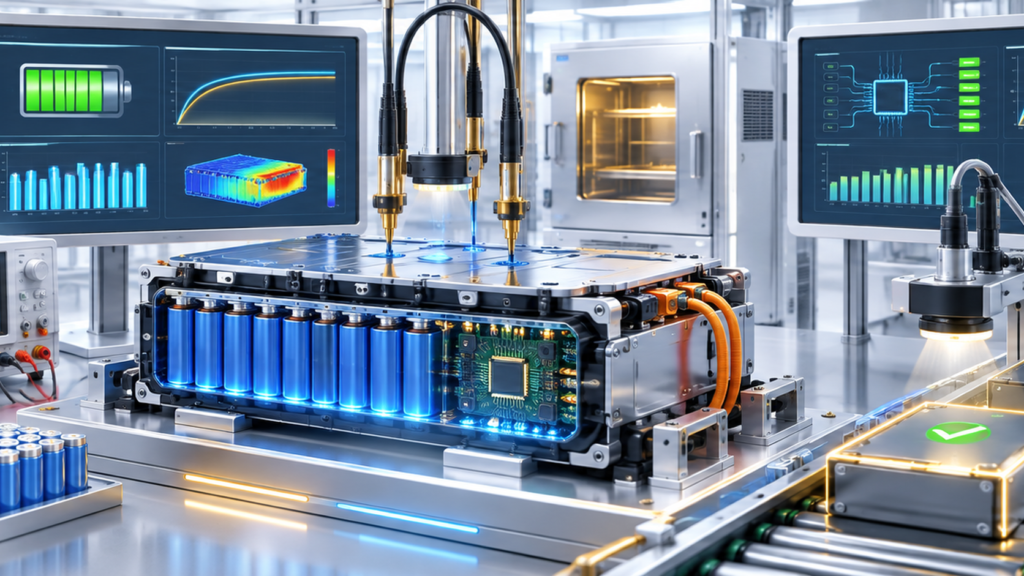
Automation-assisted quality control is becoming increasingly common in modern battery manufacturing. Automated measuring devices, programmable test infrastructure, digital monitoring systems and analysis software can improve measurement accuracy, test repeatability and traceability.
Recording production data and comparing it across individual products helps identify potential quality issues early. Advanced manufacturing facilities may also use AI-assisted analysis and automation technologies to improve quality control.
Battery testing and quality control constitute a holistic process that extends beyond the final stage of manufacturing. Appropriate test methods, systematic checks and continuous improvement support the development of safe, efficient, sustainable and long-lasting energy storage solutions while improving battery performance and reliability.