The New Reality of Industrial Energy Needs
For businesses operating today, energy is not merely an operating cost; it is a strategic factor that has a substantial influence on production continuity, data security, and service quality. In systems that must operate without interruption—such as factories, logistics centers, hospitals, data centers, and telecommunications infrastructure—energy continuity has become critical. In this context, battery solutions for industrial applications stand out as a core elements of a business’s energy infrastructure.
Power outages, voltage fluctuations, or grid-related issues can cause serious losses for businesses. Production downtime, data loss, equipment damage, and operational disruptions are direct consequences of such events. For that reason, modern businesses are no longer structures that only consume energy; they are also evolving into systems that store and manage energy.
In Türkiye, interest in industrial battery installations is growing rapidly, especially in industrial zones and organized manufacturing facilities. The main reasons are to reduce electricity-related costs and ensure uninterrupted business operations.
What Is an Industrial Battery?
An industrial battery refers to a battery system used to store energy and supply power when needed in applications that require high capacity and power, and it is commonly used by large-scale businesses. Such systems stand out for features such as high energy capacity, power-delivery capability, durability, and suitability for long-term operation.
Industrial battery installations are commonly used in the following areas:
- Factory production lines
- Data centers
- Hospitals and healthcare facilities
- Telecommunications base stations
- Logistics and cold-storage facilities
- Solar power plants (SPPs)
- UPS and emergency power systems
The main purpose of these systems is not only to store energy but also to ensure the continuity of the business’s energy supply.
How Industrial Battery Systems Work
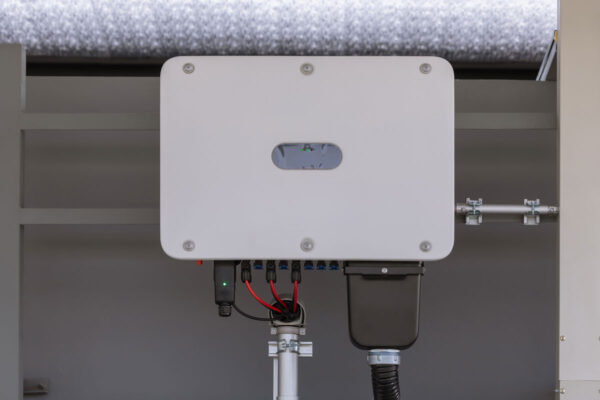
In industrial battery installations, electricity is held in chemical form and converted back into electrical energy whenever power is required. The process commonly operates in integration with an inverter and a BMS (Battery Management System).
Lower-cost energy can be stored during daytime hours and used during peak-demand periods or interruptions to electricity supply. For that reason, businesses can optimize electricity-related costs while maintaining uninterrupted operations.
Types of Industrial Batteries
LiFePO₄ Industrial Batteries
Today, LiFePO₄ technology is one of the most widely preferred options for industrial batteries. Batteries of this type offer high safety, extended operating life, and consistent performance.
Batteries of this type offer high safety, extended operating life, and consistent performance. Depending on the depth of discharge (DoD), LiFePO₄ systems can achieve a cycle life of 6,000 cycles or more, providing a substantial advantage for long-term investment. Their higher level of thermal safety has also contributed to their widespread use in large-scale businesses.
Lithium-Ion Batteries
Batteries of this type offer higher energy density and are especially preferred in systems where space is limited. Cycle life, safety, and performance characteristics vary depending on the cell chemistry used and the installation design.
Gel and AGM Batteries
Gel and AGM batteries are more traditional solutions and are still used in some small industrial applications because of their lower cost. Nevertheless, they lag behind modern lithium systems in terms of cycle life and efficiency.
Advantages of Industrial Battery Systems
Uninterrupted Power Supply: Among the key advantages of industrial battery installations is their ability to activate immediately during interruptions to electricity supply, enableing production or services to continue. This characteristic is especially vital for critical infrastructure.
Reducing Energy Costs: Businesses can store energy during lower-tariff periods and use it during higher-tariff periods. This can offer a substantial cost advantage over the long term.
High Efficiency and Stability: Modern industrial battery installations minimize losses of usable energy and enable more efficient energy use. When paired with suitable inverter and power-electronics infrastructure, they can contribute to improved power quality and support the operation within safe limits of connected equipment.
Scalable Architecture: Industrial battery solutions can have a modular structure. This makes it possible for system capacity to be expanded easily as the business grows.
What Should Be Considered When Selecting an Industrial Battery?
Capacity Calculation: The business’s daily energy consumption must be analyzed accurately. Selecting the wrong capacity may cause an undersized system or unnecessary costs.
BMS Quality: The BMS ensures the operation within safe limits of the battery. In industrial systems, the use of a high-quality BMS is essential.
Cycle Life: When considering a long-term investment, the number of charge and discharge cycles a battery can withstand is a critical factor. Nevertheless, cycle life depends on numerous factors, including cell chemistry, depth of discharge, temperature, charge and discharge currents, and operating conditions. LiFePO₄ systems offer an advantage in this respect.
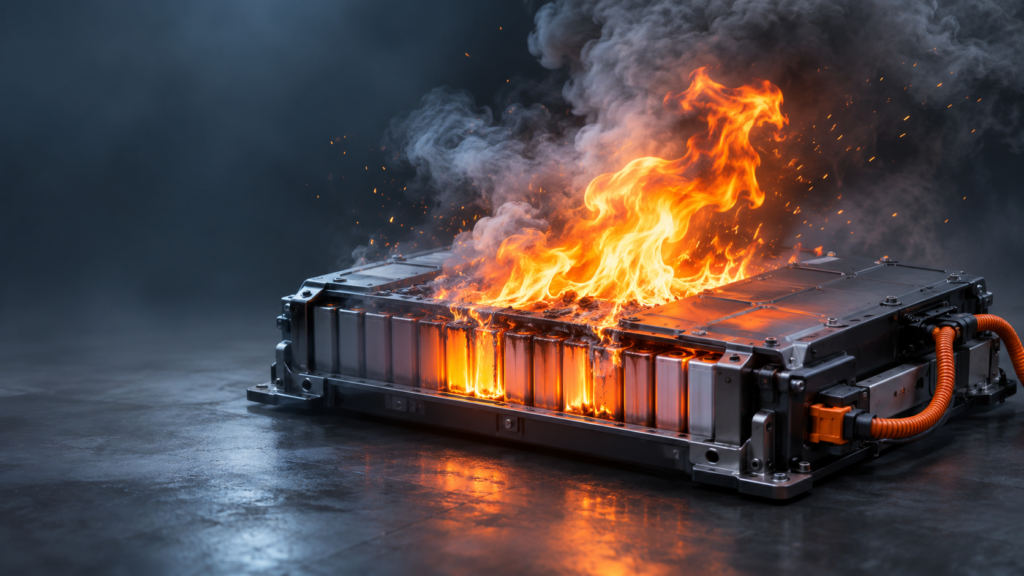
Thermal Management: Thermal control is critically meaningful in large systems. Inadequate cooling can substantially shorten battery life.
Industrial Battery and Solar Energy Integration
Today, solar power plants are one of the most common application areas for industrial battery installations. Surplus energy generated during the day is stored in batteries and used at night or during periods of low generation.
This structure delivers major advantages in terms of energy supply security, increasing self-consumption, and cost optimization. As manufacturing and industrial facilities in Türkiye increasingly adopt solar energy, demand for industrial battery installations is growing rapidly.
The Future of Industrial Battery Systems
As the energy transition accelerates, industrial battery installations are emerging as an especially important infrastructure components of the future. AI-supported energy management, smart grids, and higher-capacity battery technologies continue to advance this field.
LiFePO₄ and next-generation lithium technologies, in particular, are paving the way for safer, more efficient, and longer-lasting systems.
Future battery solutions for industrial applications will consist not only of battery cells, but of integrated architectures in which the BMS, power electronics, energy-management software, and remote-monitoring systems work together.