Solar energy systems have become one of the most important renewable energy solutions for both individual users and businesses in recent years. Rising electricity costs, the need for energy independence, and the growing trend toward sustainable living have significantly increased interest in solar energy systems. However, high-quality solar panels alone are not enough to ensure efficient system operation. Choosing the right battery for energy storage is just as important as selecting the panels themselves. Therefore, solar battery selection is one of the most critical factors directly affecting overall system performance.
While solar panels generate electricity during the day, this energy must be stored in batteries for use at night or when sunlight is insufficient. Choosing the wrong battery system can reduce the efficiency of the entire solar energy investment. Insufficient capacity, a short cycle life, or inefficient battery technology can lead to frequent power interruptions. For this reason, selecting the right battery is not merely a technical consideration but also a long-term investment decision.
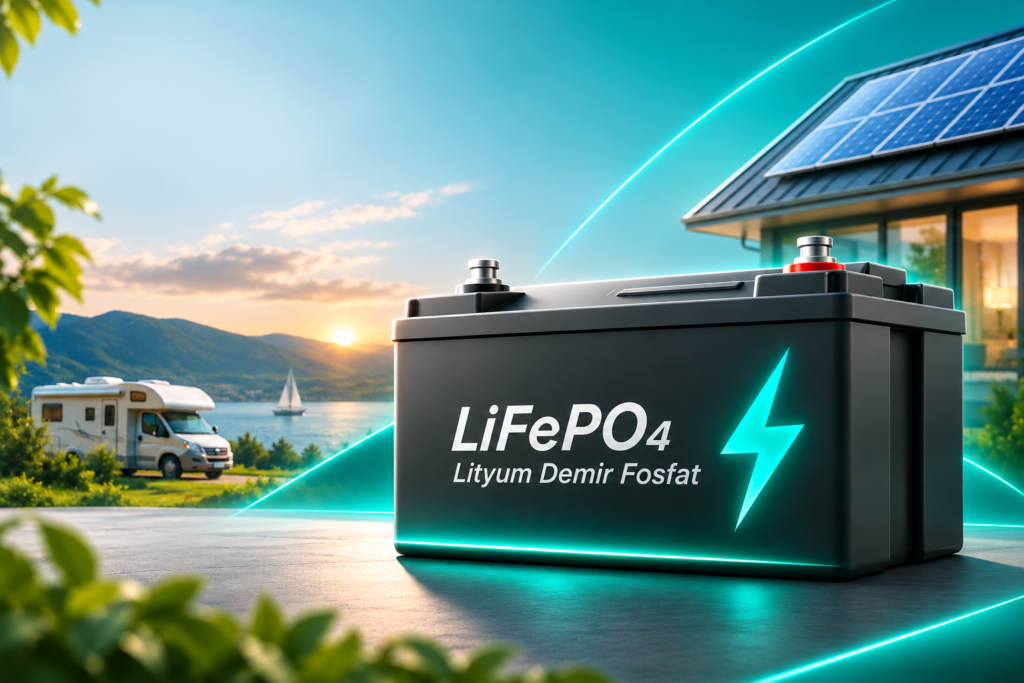
As solar energy systems continue to expand rapidly in countries with high solar potential, such as Türkiye, users are becoming increasingly informed about their choices. In particular, advancements in LiFePO₄ battery technology have significantly improved the efficiency of solar energy systems.
What Is the Role of a Battery in Solar Energy Systems?
In solar energy systems, the battery is one of the most important components responsible for storing generated electricity. Solar panels produce energy only when sufficient sunlight is available, while electricity demand continues throughout the day and night. Therefore, excess energy must be stored for later use.
The battery system stores surplus electricity generated during the day and supplies it back to the system when needed. It enables continued operation, particularly at night or during cloudy weather. For this reason, solar battery storage systems play a fundamental role in achieving energy independence.
Additionally, the battery system works together with the inverter, which converts direct current (DC) into alternating current (AC) for use in homes and businesses. Throughout this process, battery efficiency directly influences the overall performance of the system.
What Are the Different Types of Solar Batteries?
Different battery technologies can be used in solar energy systems. However, each technology has its own advantages and disadvantages.
The most commonly used battery types include:
- Gel batteries
- AGM batteries
- Lead-acid batteries
- LiFePO₄ (Lithium Iron Phosphate) batteries
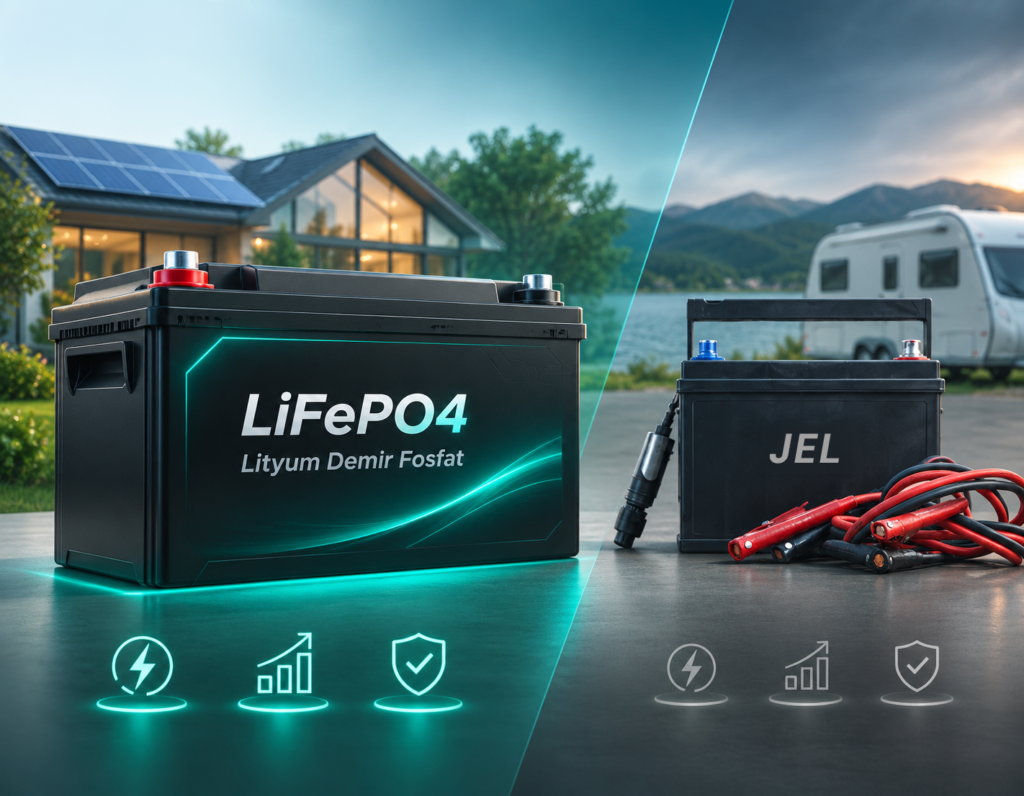
Although gel and AGM batteries offer lower initial costs, they may have limitations in terms of cycle life and long-term efficiency. Conventional lead-acid batteries are also becoming less common in modern systems due to their relatively short service life and heavy construction.
In recent years, LiFePO₄-based solar battery storage systems have become an increasingly preferred solution due to their high efficiency and long service life.
How to Choose the Right Battery for Solar Energy Systems
Daily Energy Consumption Must Be Calculated
The first step in selecting the right battery is determining daily energy consumption. The power ratings (watts) and operating hours of all devices used in a home or business should be calculated. This assessment helps establish the system’s total daily energy requirements.
For example, system design should consider the combined energy consumption of refrigerators, televisions, lighting, computers, and other electrical devices. This value forms the basis for determining the required solar battery capacity.
Incorrect energy consumption calculations may result in an undersized system or unnecessary additional costs.
How Is Battery Capacity Determined?
Battery capacity is generally expressed in Ah (ampere-hours) and Wh (watt-hours). Both values should be considered when determining the appropriate capacity for a solar energy system.
The basic calculation is as follows:
Wh = V × Ah
This formula indicates the battery’s total nominal energy capacity. For example, a 12V 200Ah battery can store 2,400Wh of energy.
However, when selecting a solar battery, usable capacity is just as important as theoretical capacity. While the full nominal capacity of gel batteries is generally not utilized, LiFePO₄ batteries allow a greater proportion of stored energy to be used.
Advantages of LiFePO₄ Batteries in Solar Energy Systems
The primary reasons for choosing LiFePO₄ batteries in solar energy systems are their long service life and high efficiency. These batteries can withstand thousands of charge-discharge cycles and maintain reliable performance over many years, although their capacity gradually decreases with use.
Their deep discharge capability also allows a large proportion of stored energy to be utilized. This provides a significant advantage for users seeking to maximize the efficiency of their solar energy systems.
LiFePO₄ batteries are also lighter, offer greater thermal stability, and can support faster charging compared to many conventional lead-acid batteries. As a result, they are becoming increasingly common in modern solar energy storage systems.
Common Mistakes in Solar Energy Systems
One of the most common mistakes when selecting solar batteries is focusing solely on price. Although inexpensive batteries may appear cost-effective initially, they can lead to higher expenses in the long term.
Another common mistake is incorrectly calculating the required battery capacity. Calculations that do not account for inverter losses and overall system efficiency may result in insufficient energy storage capacity.
Additionally, using different battery types within the same system can cause performance issues. Therefore, compatible components should be selected during system design.
Inverter and Battery Compatibility in Solar Energy Systems
In solar energy systems, batteries do not operate independently. They must work in coordination with a compatible inverter. The inverter converts direct current (DC) from the battery into alternating current (AC) that can be used by electrical appliances.
Therefore, inverter power requirements must be considered when selecting a solar battery. Higher-power inverters require batteries capable of delivering sufficient discharge current and power.
Incompatible systems can result in reduced efficiency and potential equipment failures.